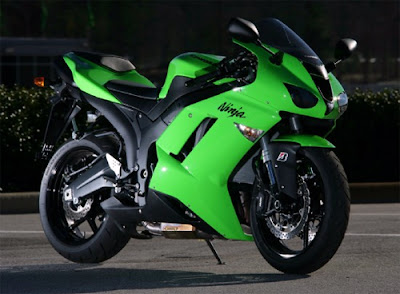
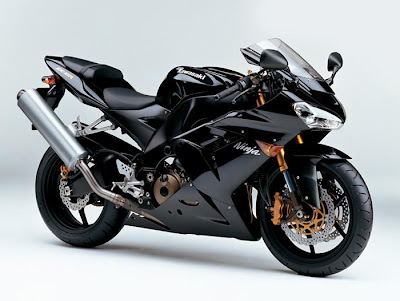
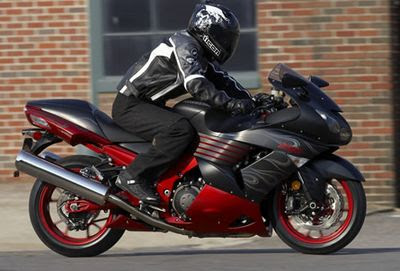
Showing posts with label Kawasaki. Show all posts

Kawasaki KX250F

Thursday, 20 September 2012


2013 Kawasaki KX250F is Kawasaki KX motocross series that was modified on the suspension. Motorcycle “off-road” uses of the Showa suspension but changes to a more progressive damping and uses a larger 48mm tube.
New 2013 kawasaki kx250f
Kawasaki KX250FNew 2013 kawasaki kx250f Green Black2Kawasaki KX250F Front Side
There was also conducted on the cylinder head design for increased air flow better in Airbox, dual injector and a more compact frame. KX 250F gets a new exhaust 30mm shorter. This makes the exhaust much closer to the center of the engine with the exhaust chamber 7mm wider, yet still meet the requirements of 94 dB.
Kawasaki KX250F uses aluminum perimeter chassis to increase the overall stiffness. Lengthening the front with a 20mm aluminum swingarm offers 4.2% increase in stiffness. In addition it offers the right fork preload adjustment for the perfect ride. Internally the main piston (rebound) and the sub piston (compression) is larger and comes from an increase in the lower fork tubes from 47mm to 48mm.
New 2013 kawasaki kx250f Top Angle
Kawasaki KX250F Top AngelNew 2013 kawasaki kx250f engine 
Kawasaki KX250F Engine
In addition to the design of a powerful engine and better handling, Kawasaki KX250F also has a beautiful view. By converting the plastic into the fender, slender body, suspension adjuster, spark plugs are blue anodized engine, clutch and ignition side cover is no longer black, fresh appearance will continue to be updated from time to time.

2013 Kawasaki KX250F

Engine: DOHC, 4-valve, Liquid-cooled, 4-stroke Single
Displacement: 249cc
Bore x Stroke: 77.0 x 53.6mm
Fueling: DFI® with 43mm Keihin throttle body and dual injectors
Compression Ratio: 13.8:1
Transmission: Five-speed with wet multi-disc manual clutch
Final Drive: Chain
Frame: Aluminum perimeter
Rake/Trail: 28.7 deg. / 5.0 in.
Front Suspension: 48mm Showa SFF fork, 40-way spring preload adjustability, 22-position compression, 20-position rebound damping, 12.4 in. travel
Rear Suspension: Uni-Trak® linkage system and Showa shock, 9-position low-speed and stepless high-speed compression, 22-position rebound damping, adjustable preload, 12.2 in. travel
Front Tire: 80/100-21
Rear Tire: 100/90-19
Front Brake: Semi-floating 250mm petal disc, 2-piston caliper
Rear Brake: 240mm petal disc, 1-piston caliper
Overall Length: 85.4 in.
Overall Width: 32.3 in.
Overall Height: 50.0 in.
Wheelbase: 58.1 in.
Ground Clearance: 13.0 in.
Seat Height: 37.2 in.
Curb Weight: 233.6 lbs. (claimed)
Fuel Capacity: 1.61 gal.
Color: Lime Green

2012 Kawasaki Ninja 250R

 2012 Kawasaki Ninja 250R has all the essential elements that make it perfect sportbike, like the smooth torque delivery at lower speeds, low seats and powered by a liquid-cooled, twin cylinder.
New 2012 Kawasaki Ninja 250RKawasaki Ninja 250R Picture
With an aggressive style and modern aerodynamic fairing supersport bodywork fitted windscreen makes the Kawasaki Ninja 250R looks great and gives a deflection of wind to be effective in a variety of conditions that increase your driving pleasure and comfort.
2012 Kawasaki Ninja 250R is equipped with 249cc DOHC parallel twin-cylinder engine that offers mass centralization and handling superior to the mid-range and high-rpm for excellent performance on the highway. Equipped also tasked with keeping the weight of the ring piston to help prevent oil consumption and Twin Keihin carburetor CVK30 that offer better power and helps fuel economy.
New 2012 Kawasaki Ninja 250R RedKawasaki Ninja 250R Red
New 2012 Kawasaki Ninja 250R Green2Kawasaki Ninja 250R Green
New 2012 Kawasaki Ninja 250R Black2Kawasaki Ninja 250R Black
On the cylinder head combustion chamber is designed to maximize combustion efficiency and reduce emissions such as intake and exhaust ports contribute to good off-idle response and smooth power delivery, Valve is designed to manage time or a strong low and mid-range torque, direct valve actuation helps ensure high-rpm operability.

2012 Kawasaki Ninja 250R

Engine: Four-stroke, liquid-cooled, DOHC, parallel twin
Displacement: 249cc
Bore x stroke: 62.0 x 41.2mm
Compression ratio: 11.6:1
Cooling: Liquid
Carburetion: Keihin CVK30 x 2
Ignition: TCBI with digital advance
Transmission: Six-speed
Final drive: O-ring chain
Frame: Semi-double cradle, high-tensile steel
Wheelbase: 55.1 in.
Rake / trail: 26 degrees / 3.2 in.
Front suspension / wheel travel: 37mm hydraulic telescopic fork / 4.7 in.
Rear suspension / wheel travel: Bottom-link Uni-Trak® with 5-way adjustable preload / 5.1 in.
Front tire: 110/70-17
Rear tire: 130/70-17
Front brake: Single 290mm hydraulic petal disc with two-piston caliper
Rear brake: Single 220mm petal disc with two-piston caliper
Overall length: 82.1 in.
Overall width: 28.1 in.
Overall height: 43.7 in.
Seat height: 30.5 in.
Curb weight: 374.9 lbs.
Fuel capacity: 4.8 gal.
Color choices / special edition: Candy Lime Green, Metallic Spark Black, Passion Red/Metallic
Spark Black
Warranty: 12 months
Optional Good Times™ Protection Plan 12, 24, 36 or 48 months

2012 Kawasaki Ninja 250

Thursday, 6 September 2012


Kawasaki has released information about its 2012 Ninja 250. Yes, you read that right, Kawasaki has dropped the “R” from its littlest Ninjette. And no, it’s still not fuel injected.
As shown on Kawasaki Motors Corp. U.S.A.’s website, the 2012 Kawasaki Ninja 250 has the same specs as the 2011 Ninja 250R, only it’s missing the “R”.  The 2012 Ninja 250 is powered by a249cc liquid-cooled parallel Twin engine with a six-speed transmission. And despite Honda upping the ante with the fuel-injected CBR250R, Kawasaki is keeping its Keihin CVK30 carbs instead of importing the fuel-injected version available in other markets.
Like the 2011 250R, the 2012 Ninja 250 has a 4.8 gallon fuel tank, 37mm hydraulic telescopic fork, preload-adjustable rear suspension and a the same claimed weight of 374.9 pounds.
Kawasaki will offer the 2012 Ninja 250 in three color options: Passion Red, Metallic Spark Black and Candy Lime Green. The 2012 Kawasaki Ninja 250 is priced at $4,199, an increase from the 2011 Kawasaki Ninja 250R’s $3,999 price tag.
But what about the missing “R”? Until 2008, the Kawasaki Ninja 250R was known by various names over the years and depending on where  you were in the world. Some called it the EX250, some called it the GPX-250R, and some called it the ZZR-250. In 2008, Kawasaki rebranded the motorcycle around the world as the Ninja 250R.
Why did Kawasaki drop the “R”? Probably to differentiate between its faired street bikes from its ZX supersports. In 2011, Kawasaki offered a Ninja 650R and, in some markets, a Ninja 400R, but the Ninja 1000 went without the R. Don’t be surprised to see the Ninja 650 lose its R this year.

2011 Kawasaki Ninja ZX-10R


A recall has been issued on the 2011 Kawasaki Ninja ZX-10R due to a problem with the wiring harness.
According to documents released by the National Highway Traffic Safety Administration, a portion of the wiring harness on some 2011 Kawasaki Ninja ZX-10R models may get pinched between the subframe and the rear fender, or between the subframe and the bolt holding the seat cover. This may result in damage to the harness and wiring, potentially resulting in a short in the electrical system, which could cause the engine to suddenly stop.
The problem was first discovered during endurance testing for the 2012 edition of the ZX-10R after a test unit had a blown fuse, stopping the engine. A boss added to the rear fender on 2011 models  reduced the space where the wire harness is routed, increasing the risk of it being pinched.
Kawasaki dealers will inspect the wiring harness on 2011 ZX-10R models and repair them if necessary, and reroute the main harness. The recall campaign affects 2,560 units including both ABS and non-ABS versions of the 2011 Kawasaki ZX-10R.
[Source: NHTSA, Campaign ID# 11V363000]

2013 Kawasaki Ninja 300


Kawasaki Europe has pulled the wraps off a new Ninja 300, a larger-displacement version of its popular entry-level Ninja 250.
We first broke the news of an new Kawasaki Ninja 300 last week when the model was included in a list of 2013 motorcycles released by the U.S. Environmental Protection Agency. As we reported, the new model is powered by a fuel-injected 296cc four-valve twin-cylinder engine claiming 39 hp.
The 2013 Kawasaki Ninja 300 will also be available with anti-lock brakes. The ABS components are built by Nissin and are said to be 40% smaller than previous Nissin ABS systems. The Ninja 300 also features a slipper clutch and a back-torque limiter developed from Kawasaki’s racing program. According to Kawasaki, the new FCC Assist and slipper clutch allows for a lighter clutch lever pull.

Visually, the Ninja 300 gets the same styling the 2013 Ninja 250 received, with ZX-10R style “floating” windscreen, ZX-6R dual headlights and fins on the side fairing like the ZX-14R.
As of now, the 2013 Kawasaki Ninja 300 has only been announced for Europe where it replaces the Ninja 250. The 2013 Ninja 250 will still be offered in some markets such as Asia where it is already available. It’s not clear however whether the new 300 will be offered in the U.S. We’ll have to wait until Kawasaki USA announces its 2013 Ninja lineup in New York City on Sept. 13.http://blog.motorcycle.com/wp-content/uploads/2012/09/090512-2013-kawasaki-ninja-300-3.jpg

Kawasaki ZX-10R


Emerson Fittipaldi is probably best known for his four-wheel racing career which include two Formula One World Championships, a CART racing title and two Indy 500 victories. What might be less known, at least outside of his native Brazil perhaps, is Fittipaldi owns a pair of Kawasaki motorcycle dealerships.
The 65-year-old former racer and his team has produced a limited edition run of 50 Kawasaki ZX-10R sportbikes in the black and gold colors of his 1972 F1 Championship-winning John Player Lotus 72 car. Beside the paint job, the Fittipaldi ZX-10R features a number of accessories.
Fittipaldi will produce just 50 autographed and numbered models. He will keep one for himself and auction a second. The rest will be available for sale.

Kawasaki ZX-10R (2011)

Wednesday, 5 September 2012


Kawasaki have launched the all-new ZX-10R. The much awaited new model steps up to the plate with a claimed 200bhp at the crank, traction control as standard and the option of ABS. No prizes for guessing the bike Kawasaki want to knock off the top spot.
One thing is clear; Kawasaki aren't messing about with this one. Since the original ZX-10R in 2004, they've struggled to keep up with the competition but with the new bike boasting S-KTRC, Kawasaki's clever traction control system, three power modes and the option of KIBS, Kawasaki's ABS system, the ZX-10R is packed with the latest technology and spoiling for a fight with the litre superbike class leaders.
The first thing you notice about the ZX-10R is how small it is. A ZXR400 was the first bike I thought of when I slung my leg over the 10R in the oppressively hot Qatar heat. It's a full 10kg less than the outgoing 10R too. I don't know about you but I'm still impressed at the rate at which these bikes get developed. The all-cast frame is the lightest in its class and has enabled Kawasaki to make these huge weight savings.
I had five sessions out on track and used the first two to learn the Losail circuit. I can confidently say that Losail is the toughest circuit I've ever ridden, it's as flat as a tea tray, with no obvious trackside features and to make it even more awkward: every corner looks the same.
Despite not getting to grips with the circuit in the first couple of sessions, I had plenty of time to get comfortable with the basics that make the new ZX-10R so good. It handles like a 600, infact better than most. The front end feels so plush, so precise and very light. In order to build confidence, I have to trust the front-end and when I was running into corners too hot in the early sessions while still getting to grips with the circuit, the front never protested and my confidence didn’t take a knock.
Although the new ZX-10R’s wheelbase is 10mm longer than the outgoing model, there’s no way you could accuse the new 10R of being a barge.  You can remove the bike’s standard cat and move the rear wheel in by 16mm. I’m not sure you’d need to as the 10R already drops into corners with little effort and handles the transition flick from left to right with ease. Shortening the wheelbase might make the 10R more nimble but potentially at the cost of its stability through the longer 120mph+ right-handers at the back of the Losail circuit.
The brakes are astonishingly powerful but I suppose they'd be nothing without the 43mm Big Piston Forks. If you've not ridden a bike with a set of these forks on, you need to. They give you feedback in High Definition.
I stuck to 2nd and 3rd gear for the early sessions so I could concentrate on braking and turn-in points. The engine's power delivery is incredibly smooth, so much so that it doesn't feel like a big and torquey litre superbike that kicks in with a big wallop, it fizzes like a 600 and because the Losail circuit is so wide, it was hard to feel just how much grunt the 10R really has. I'm sure if I was riding around Cadwell Park I'd be able to tell you a different story...
Kawasaki have used more precise engineering techniques when building the new engine, so much so that lighter pistons and lower tension piston rings are used. The result is a bike that revs with a ferocity that I've only ever seen matched by a two-stroke 250 race bike. It is so easy to dial up too many revs, deliver too much power to the rear wheel and fire yourself into a corner 20mph faster than you should be going. Ideal when you're learning the circuit!
The throttle response is razor sharp, especially in the lower gears at higher revs. It took some getting used to at first as I found the pick-up jerky coming out of both of Losail’s left-hand hairpins. The pick-up was so quick I found myself rolling off before rolling on again, unsettling the bike and feeling a touch disconnected from the engine. There’s nothing wrong with the bike, it was just me that needed to adapt and once I tempered my harsh and eager throttle hand, I had a lot more confidence in setting the revs to where I wanted them to be and focusing on getting on with getting the 10R into the turn.
It was only in the last session of the day – the first time I put in some proper laps – did I get to feel the benefit of what is arguably the best bit of technology on the new ZX-10R; S- KTRC. Traction control to you and me.

Kawasaki Ninja

https://blogger.googleusercontent.com/img/b/R29vZ2xl/AVvXsEhU-4f_o1Ulgb796OZUv3PBjAssxk0GJuVnmZucaVOTgaNFOMMb96Bs3KO3kXXTH-nWU-QfgboRaEGpoZMVhzBac_Eoytgtu8LahQFARKYyYRreDhW9kXo4l0aH9UfB-0OWLQkQOcW9CP5P/s1600/2009-kawasaki-zx-6r-face.jpg

Engine Four-stroke, liquid-cooled, DOHC, four valves per cylinder, inline-four
Displacement 1,043cc
Bore x Stroke 77.0 x 56.0 mm
Compression Ratio 11.8:1
Fuel System DFI® with four 38mm Keihin throttle bodies, oval sub-throttles
Ignition TCBI with digital advance
Transmission Six-speed
Final Drive X-ring Chain
Rake/Trail 24.5deg / 4.0 in.
Front Tire Size 120/70 ZR17
Rear Tire Size 190/55 ZR17
Wheelbase 56.9 in.
Front Suspension / wheel travel 41 mm inverted cartridge fork with stepless compression and rebound damping, adjustable spring preload / 4.7 in.
Rear Suspension / wheel travel Horizontal monoshock with stepless rebound damping, adjustable spring preload / 5.4 in.
Front Brakes Dual 300mm petal-type rotors with radial-mount four-piston calipers
Rear Brakes Single 250mm petal-type rotor with single-piston caliper
Fuel Capacity 5.0 gal.
Seat Height 32.3 in.
Curb Weight 502.7 lbs.
Overall length 82.9 in.
Overall width 31.1 in.
Overall height 48.4 in.
Color Choices Ebony, Candy Fire Red / Ebony
Warranty 12 Months
Good Times™ Protection Plan 12, 24, 36, 48 months  


http://www.b2b-china.com.cn/shop/images/categories/Kawasaki_NINJA_ZX-6R_%202008.jpg

Kawasaki z100


http://1.bp.blogspot.com/_1dRwyHUuRzQ/S17BPwb5W9I/AAAAAAAABDU/QAlcvLCEJ4A/s400/2010-Kawasaki-Z1000.jpg

 Specifications:

Engine      Four-stroke, liquid-cooled, DOHC, four valves per cylinder, inline-four
Displacement     1043 cc
Bore x Stroke     77.0 x 56.0mm
Compression Ratio     11.8:1
Fuel System     DFI® with four 38mm Keihin throttle bodies, oval sub-throttles
Ignition     TCBI Digital Advance
Transmission     6-Speed
Final Drive     X-Ring Chain
Frame Type     Aluminum Backbone
Rake/Trail     24.5 deg. / 4.1 in.
Front Suspension / Wheel Travel     41 mm inverted cartridge fork with stepless compression and rebound damping, adjustable spring preload / 4.7 in.
Rear Suspension/Wheel Travel     Horizontal monoshock with stepless rebound damping, adjustable spring preload / 5.4 in.
Front Tire Size     120/70 ZR17
Rear Tire Size     190/50 ZR17
Wheelbase     56.7 in.
Front Brakes     Dual 300mm petal-type rotors with radial-mount four-piston calipers
Rear Brakes     Single 250mm petal-type rotor with single-piston caliper
Fuel Capacity     4.0 gal.
Seat Height     32.1 in.
Overall Length     82.5 in.
Overall Width     31.7 in.
Overall Height     42.7 in.
Color Choices     Candy Lime Green / Ebony, Ebony
Warranty     12 months
Good Times™ Protection Plan     12, 24, 36 or 48 months
http://4.bp.blogspot.com/_1dRwyHUuRzQ/S17BTXMmEII/AAAAAAAABDc/6eAOlJprkf8/s400/2010-Kawasaki-1400GTR.jpg

NINJA® ZX™-14

https://blogger.googleusercontent.com/img/b/R29vZ2xl/AVvXsEh9jcgKGwMJJI4zSHueWbpuiudvMOwpw56dAT9oxnDDPY116redcukkagYFNnJKWWsqwZ3enr6VePKq2Pk-fHQZXj9c-w5fUTnZzMmfl6gvLE1exswJWk8Ft7o64BHmG1AF2lHM4i3mYGdL/s1600/Kawasaki-Ninja-ZX-14-1.jpg
2008 and Subsequent Models - One-Year Warranty
Your new 2008 Kawasaki ATV comes with a 12-month limited factory warranty. Read the information below to find out how you can extend your coverage inexpensively thoug the Good TImes Protection Plan, or ask your dealer for details about the factory warranty and available extended coverage.
2007 and Prior Year Models - Six-Month Warranty
Your new Kawasaki ATV comes with a 6-month limited factory warranty. Read the next paragraph to find out how you can extend your coverage inexpensively, or ask your dealer for details about the factory warranty and available extended coverage.
Up to Four Years Additional Coverage*
Let Kawasaki protect your new machine for years to come* with the exclusive Good Times™ Protection Plan†. This plan repairs or replaces most components free of charge if found defective in material or workmanship. Everything about the plan is easy: There's no deductible. It's honored at every authorized Kawasaki ATV dealer nationwide. And it's transferable to another owner with no fee. Just ask your dealer how you can buy additional coverage of 12, 24, 36 or 48 months. Imagine, for just pennies a day, you can ride with no worry and no hassle. Just tell your dealer you want the Good Times Protection Plan.
*Depending on the program purchased.
†Good Times Protection Plan available in Canada through Canadian Kawasaki Motors
https://blogger.googleusercontent.com/img/b/R29vZ2xl/AVvXsEjB2Q5h_svSwlvgOYjIn6W_yX2RZMY6FiBPxZhF2wcgxIQDrRjwhDNpM_27h5QY2d2fVmJm00jYwqjoBabizQpjiiDCcNUgGA8tdvPUnenOiT7loUpS-yki9yl8YknsJ-QYjDB5MqhMUw/s400/kawasaki-ninja-zx-14-400x2711.jpg


One-Year Warranty
Your new MULE utility vehicle comes with Kawasaki’s 12-month/unlimited mileage limited factory warranty. And you can extend your coverage inexpensively. Ask your dealer for details about the factory warranty and available extended coverage.
Up to Two Years Additional Coverage*
Let Kawasaki protect your new machine for years to come* with the exclusive Good Times™ Protection Plan†. This plan repairs or replaces most components free of charge if found defective in material or workmanship. Everything about the plan is easy: There's no deductible. It's honored at every authorized Kawasaki MULE dealer nationwide. And it's transferable to another owner with no fee. Just ask your dealer how you can buy additional coverage of 12 or 24 months. Imagine, for just pennies a day, you can ride with no worry and no hassle. Just tell your dealer you want the Good Times Protection Plan.
*Depending on the program purchased.
†Good Times Protection Plan available in Canada through Canadian Kawasaki Motors.
Back to Top
TERYX Recreation Utility Vehicle
Six-Month Warranty
Your new TERYX Recreation Utility Vehicle comes with Kawasaki’s 6-month/unlimited mileage limited factory warranty. And you can extend your coverage inexpensively. Ask your dealer for details about the factory warranty and available extended coverage.
Up to Four Years Additional Coverage*
Let Kawasaki protect your new machine for years to come* with the exclusive Good Times™ Protection Plan†. This plan repairs or replaces most components free of charge if found defective in material or workmanship. Everything about the plan is easy: There's no deductible. It's honored at every authorized Kawasaki TERYX dealer nationwide. And it's transferable to another owner with no fee. Just ask your dealer how you can buy additional coverage of 12, 24, 36 or 48 months. Imagine, for just pennies a day, you can ride with no worry and no hassle. Just tell your dealer you want the Good Times Protection Plan.
*Depending on the program purchased.
†Good Times Protection Plan available in Canada through Canadian Kawasaki Motors.
http://pictures.topspeed.com/IMG/crop/200907/kawasaki-ninja-zx-14-3_460x0w.jpg

Kawasaki xm500

http://i137.photobucket.com/albums/q203/aj277/kx500af/2009KX500AF012s.jpg

Retro:

  • 360° crank angle
  • 72 mm bore x 80 mm stroke "long-stroke" engine
  • chrome fenders
  • real rubber fork gaiters and
  • faux-Smiths gauges
  • alloy rims and
  • peashooter mufflers
  • kickstarter
Modern:
  • eight valves
  • LCD odometer and clock hiding in the speedo face
  • electronic speed & RPM meter
  • bungee hooks
  • centerstand
  • seat lock
  • integral steering lock
  • neutral finder
  • electric starter
  • front disc brake
  • carburetor heating device
http://img187.imageshack.us/img187/4870/kx500mono.jpg

KAWASAKI Xm500 specifications

  • MSRP $6,500 USD
  • Air-cooled, SOHC, 4 valves per cylinder, parallel twin (vertical twin, straight-two)
  • Displacement 675.8 cc
  • 8.6:1 compression
  • Electric and kick starters
  • Max Power 37kW/7000rpm
  • Max Torque 5.7kg.m/5500rpm
  • L.W.H 2180 mm . 905 mm . 1140 mm
  • Seat Height 800 mm
  • Wheelbase 1455 mm
  • Digital CDI ignition
  • Twin Keihin CVK34 carburettors with K-TRIC system.
  • Final drive: Five speed constant mesh, return shift.
  • Chain drive (KX-inspired chain adjusters)
  • Positive neutral finder
  • Tires: front 100/90x19 rear 130/80x18
  • Front brakes: Hydraulic four-pot single disc, 300mm
  • Rear brakes: Mechanical drum, 160mm
  • Handlebars: 1" diameter, 2" rise 3" pull back
  • Fuel Capacity 14 litres.
  • Oil capacity: 3 litres.
  • Dry weight: 430 lb (195 kg), about 460 lb wet.
  • Canadian colours: Galaxy Silver/Luminous Polaris Blue or Luminous Vintage Red and Pearl Ivory.
  • Other colours available in Europe and Japan: (Ebony/Pearl Luster Beige, Candy Cardinal Red/Metallic Champagne-Gold).
http://twostrokemotocross.com/wp-content/uploads/2009/11/KX500_engine.jpg

Kawasaki Ninja 650R

http://www.motorcycle.com/images/content/Product/08_dec_divi_hard.jpg


Manufacturer Kawasaki
Also called ER-6n, ER-6f
Production since 2006
Class Sport
Engine 649 cc, liquid-cooled, DOHC, parallel twin with digital fuel injection
Bore / Stroke 83.0 × 60.0 mm (3.27 × 2.36 in)
Compression ratio 11.3:1
Transmission 6-speed cassette-style
Suspension Front: 41 mm Hydraulic Telescopic Fork
Rear: 4.9 in. Single Offset Laydown Shock with Adjustable Spring Preload
Brakes Front: Dual 300 mm Petal Disc with 2-Piston Caliper
Rear: Single 220 mm Petal Disc with hydraulic caliper
Tires Front: 120/70-17
Rear: 160/60-17
Rake, Trail 24.5°, 102 mm (4.0 in)
Wheelbase 1,405 mm (55.3 in)
Dimensions L 2,100 mm (83 in)
W 760 mm (30 in)
H 1,210 mm (48 in)
Seat height 790 mm (31 in)
Weight 178 kg (390 lb) (dry)
Fuel capacity 15.5 l (3.4 imp gal; 4.1 US gal)
Related Versys   
The faired Kawasaki Ninja 650R, also known as the ER-6f, and its un-faired sister model ER-6n were introduced in 2006 by Kawasaki. They are middleweight, parallel-twin engined motorcycles, designed for normal use on paved roads. They have modern styling and features, with low-seating ergonomics, a low center of gravity, and respectable, manageable power output. The design was intended to appeal to a wide-ranging audience from newcomers to seasoned riders.
The engine is relatively unusual in employing a 180 degree crankshaft. This results in an uneven firing interval (180 degrees, 540 degrees) which gives the engine note a distinctive "throbbing" quality.
The 650R/faired ER-6, known as the ER-6f overseas, was introduced to the market in 2006. The unfaired ER-6n was not sold in North America until the 2009 model year. The motorcycle fits above the Ninja 250R and Ninja 500R models, which already existed in Kawasaki's sportbike lineup, which includes the Ninja ZX models. For 2009, Kawasaki released an updated Ninja 650R which includes new bodywork, mirrors, gauges, lighting, and a new tune on the same 649 cc engine. The curb weight is reported as 440.9 lb (200.0 kg) instead of the previous dry weight of 393 lb (178 kg).


ER-6n, now available in the US for 2009
In Europe the Ninja 650R is sold as the ER-6f ("f" denoting faired) version of the ER-6, the "naked" roadster version is sold as the ER-6n. In 2009, Kawasaki introduced the ER-6n in the USA. The ER-6f differs slightly from the Ninja 650R as it features the passenger handlebars as standard (as does the ER-6n). In addition, the option of ABS brakes were made available for both the ER-6n and ER-6f. There is also a derivative of the ER-6 called the Versys which utilizes many of the same component parts as the Ninja 650R. In many European countries the 6n naked version has proven considerably more popular than the ER-6f; however in other countries, such as Australia, the faired Ninja 650R has proven to be more popular than the un-faired ER-6n, becoming the most popular 'sports-tourer' in the Kawasaki lineup.[1]


 http://www.suburban-machinery.com/Ninja0260.jpg

  Specifications

Model Year 2006 2007 2008[2] 2009[3]
Engine
Engine Type 649 cc, liquid-cooled, parallel twin
Bore/Stroke 83.0 × 60.0 mm (3.27 × 2.36 in)
Compression Ratio 11.3:1
Maximum Power 53 kW (72 PS) (71 hp) @ 8,500 rpm
Maximum Torque 66 N·m (48.5 lbf·ft) @ 7,000 rpm
Valve Train DOHC, four valves per cylinder
Carburetion Digital fuel injection, 38 mm Keihin throttle bodies
Ignition Digital CDI
Lubrication System Semi-dry sump, SAE 10W-40
Drivetrain
Transmission 6-speed w/multi-plate clutch
Gear Ratios
1st
2nd
3rd
4th
5th
6th

39/16 (2.438)
36/21 (1.714)
32/24 (1.333)
30/27 (1.111)
28/29 (0.966)
23/27 (0.852)
Primary Reduction Ratio 88/42 (2.095)
Final Reduction Ratio 46/15 (3.067)
Final Drive O-ring chain
Chassis/Suspension/Brakes
Front Suspension 41 mm telescopic fork, 120 mm (4.7 in) travel
Rear Suspension Single offset laydown shock w/adjustable preload; 125 mm (4.9 in) travel
Front Brakes Dual 300 mm petal discs w/2-piston calipers (Optional ABS)
Rear Brakes Single 220 mm petal disc w/single-piston caliper (Optional ABS)
Front Tire 120/70ZR-17M/C 58W
Rear Tire 160/60ZR-17M/C 69W
Dimensions
Length 2,105 mm (82.9 in)
Width 760 mm (29.9 in)
Height 1,210 mm (47.6 in) 1,270 mm (50.0 in)
Wheelbase 1,410 mm (55.5 in)
Seat Height 790 mm (31.1 in)
Dry Weight 178 kg (392.5 lb), 182 kg (401.3 lb) w/ABS
Fuel Capacity 15.5 litres (3.4 imp gal; 4.1 US gal)
Oil Capacity 2.4 litres (2.5 US qt)
Rake 25°
Trail 106 mm (4.2 in)

Performance

Model Year 2006-2009
1/4 mile 12.06 sec @ 108.79 mph (175.08 km/h)[4]
Roll-On, 60-80 mph 3.58 sec[5]
http://image.superstreetbike.com/f/longbrake_00/8061902%2Bw450%2Bh338%2Bcr0%2Bre1%2Bar1/2006-kawasaki-ninja-650r-3.jpg

NINJA® ZX™-14

When Kawasaki introduced the ZX-6R back in 1995, it was the first middleweight sport bike, since the 1992 GSXR600 with an aluminum frame. It had a dry weight of 401.2 lb (182.0 kg), wet weight of 454 lb (206 kg), and was capable of accelerating 0 to 60 mph (0 to 97 km/h) in only 3.6 seconds.

1997 Kawasaki Ninja ZX-6R
There was a major revamp of the ZX-6R in 1998 with the Launch of the G series. The G series saw no increase indisplacement but power went from 100 bhp to 108 bhp thanks to the newly designed airbox. Fairing was revamped, but retained a similar design as far as the headlight, air intakes and screen were concerned. In 2000, the first J series replaced the G, increasing power to 112 bhp by increasing the compression ration from 11.8:1 to 12.8:1. The J series sported a couple of modernisations including a 180 section rear tyre, second headlight, uprated generator and stick coils (coil on plug) replacing the traditional coil with HT lead.
With competition from Honda's CBR600F4i, Suzuki's GSX-R600, and Yamaha's YZF-R6 getting more aggressive, Kawasaki decided to make an unusual move for the late 2002 models. They increased the capacity of the traditional 600 cc (37 cu in) motor to 636 cc (38.8 cu in) with the ZX-6R A1P. This version used the J series bodywork with the only notable differences being the "636" stickers on the fairing. For riders who needed bikes for displacement-restricted racing, Kawasaki also made available a limited production 599 cc (36.6 cu in) version called the Ninja ZX-6RR, but the 636 cubic centimetres (38.8 cu in) ZX-6R would be their main mass production middleweight sport bike.

2002 Kawasaki Ninja ZX-6R
In 2003, there were a number of changes to the ZX-6R, or ZX636 as it is often referred. The engine was fuel injected and engine speed was raised around 500 rpm which resulted in a slight gain in power. Radial-mounted four-piston brakes replaced the previous six-piston brakes and the front forks were now inverted. Chassis improvements resulted in higher rigidity and less weight. An all digital instrument panel was also introduced and a larger ram air inlet moved to the center over the headlight, running through the headstock. The bike, designation B1H, carried over to the 2004 model year with just color scheme changes. The ZX-6RR won the Supersport category award for Masterbike 2004 and placed third overall.

2005 Kawasaki Ninja ZX-6R
In 2005, Kawasaki again revamped the ZX-6R. Engine speed increased again by 1,000 rpm resulting in 113 hp (84 kW) at 12250 rpm.[2] The frame and swingarm were updated, but the main changes from its predecessor lay in the design. The aluminum frame was now painted flat black, fairings were more round, and integrated turn signals were used (euro model). The exhaust was now centrally under the seat (a configuration commonly referred to as an undertail exhaust). Most of these changes were mirrored in the 599 cc ZX-6RR. For the second year in a row, the ZX-6RR again won the Supersport category award for Masterbike 2005 and placed third overall. The bike carried over to the 2006 model year with minor suspension changes and new color schemes.


2007 Kawasaki Ninja ZX-6R
After four years of offering their 636 cc ZX-6R for street use and an entirely separate 599 cc ZX-6RR for displacement-restricted racing classes, Kawasaki offered only one ZX-6R for 2007, and it displaced 599 cc. Previous years of the ZX-6R's engines were all built from the same basic design, but the all-new engine for 2007 was redesigned from the crankcase up. In following with what their competitors had already been doing, Kawasaki's new engine featured a stacked gear arrangement in which the crankshaft, primary drive and countershaft are placed in a triangular format for a shorter, more compact powerplant. Now about 40 mm smaller in both length and width and it is said to yield greater cornering clearance. By using a former 125 cc Grand Prix racer as the ZX-6R’s chief development rider, Tomomi Manako, Kawasaki claims a focus has been put on track usage. Frame, swingarm, suspension, brakes, and body were completely redesigned and the bike shares very few parts from the previous model. The ZX-6R was carried over to the 2008 model year with just color scheme changes.
For 2009, Kawasaki dramatically changed the appearance of the ZX-6R to match the more angular look of the ZX-10R. The frame was lightened albeit with the same basic construction resulting in 191 kg (420 lb) wet as opposed to 205 kg (450 lb) in 2008.[citation needed] Kawasaki claims the new ZX-6R is 10 kg lighter than the previous model. The greatest changes for 2009 were the redesign of the exhaust, now carried low and not requiring the thick under-seat construction of 2008 and especially the introduction of the BPF (Big Piston Fork) suspension from SHOWA for a more progressive brake-dive. The 2010 ZX-6R is changing once more with an improved engine and slipper clutch. The exhaust pre-chamber has more space and also limits exhaust noise giving the rider a smoother ride. New double bore intake funnels features two available heights which gives performance upgrades in both high and low engine speeds. The front seat is now lower.

http://www.pricesite.org/wp-content/uploads/2011/04/Kawasaki-Ninja-ZX-6R.jpg

KAWASAKI 1400GTR

https://blogger.googleusercontent.com/img/b/R29vZ2xl/AVvXsEjHqpgidZMd3K6DoDA8qaP6OCYoaZof9QqVk6QdvPQcNvOjdpeWGKgbtZFLuqoKKuna2wqInOnu_tFPWO5NRZbliusomB-BY1KWiIaLTdN_keo3c6dVfRKoABir4yfH7O4EV2Ey0XXFOOo_/s400/Kawasaki_1400_GTR_2009_01_1024x768.jpg  

Technology:


The engine is a transverse-mounted 16-valve inline-four with a displacement of 1,352 cc (82.5 cu in). It features variable valve timing, derived from a Mitsubishi Motors car engine, which allows the phasing of the intake camshaft to be advanced by up to 24°.[2] At the time of its launch in 2007, it was the only motorcycle engine to feature variable valve timing.[3]
The fuel injected engine on the 2008 and 2009 models has a power output of 114 kW (153 hp) at 8,800 rpm and produces torque of 136 N·m (100 ft·lbf) at 6,200 rpm. The ram-air intake on the 2010 model increases power to 117.6 kW (157.7 hp).
Tetra Lever rear drive system
The bike's rear suspension-drive system is known as Tetra-Lever and is similar to the BMW Paralever and Moto Guzzi CARC systems.[2] It is designed to handle the conflicting drive and suspension forces (known as shaft effect) typical when shaft-driven motorcycles carry powerful engines.
The 1400GTR is fitted with a keyless ignition, KIPASS (Kawasaki’s Intelligent Proximity Activation Start System),[1] which means that no key is needed to start the bike as long as the rider is carrying the coded transponder—typically in a pocket.
From launch the 1400GTR had the option of an anti-lock braking system (ABS). In 2010, Kawasaki added KTRC, a traction control system, and replaced the previous ABS systems with K-ACT ((Kawasaki Advanced Coactive-braking Technology), an improved system with power-assisted brake force redistribution. K-ACT is also a combined braking system in which both the front and rear brakes are applied in differing amounts depending on whether the front brake lever or rear brake pedal is used. The rider is able to select, using a handlebar switch, the amount of front brake force applied when the rear brake pedal is used.The traction control uses the ABS sensors to detect when the front and rear wheel speeds differ—reducing rear wheel speed by telling the engine management system to reduce power output.


http://www.scenicreflections.com/ithumbs/Kawasaki_sport_tourer_1400GTR_03_1024x768.jpg